
Green Roofs
PRESERVATION: ARCHITECTURE
GREEN ROOFS
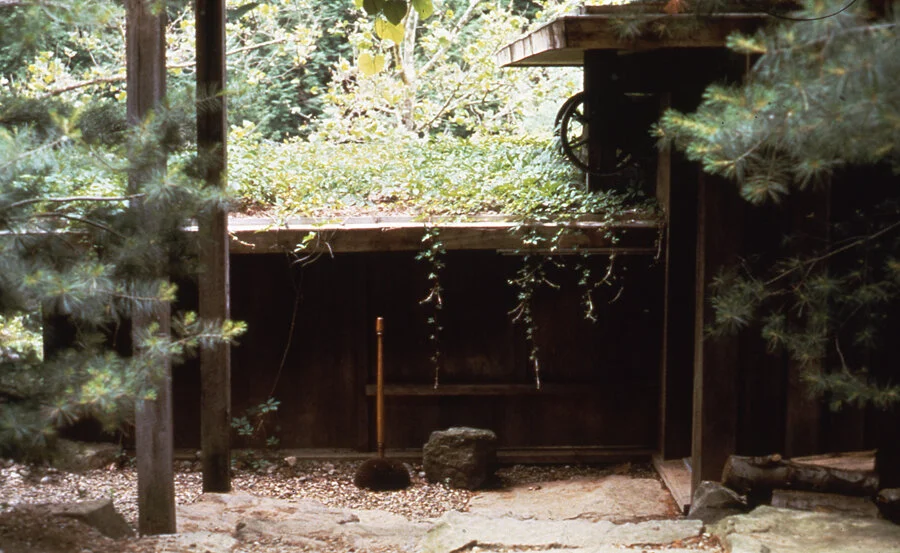
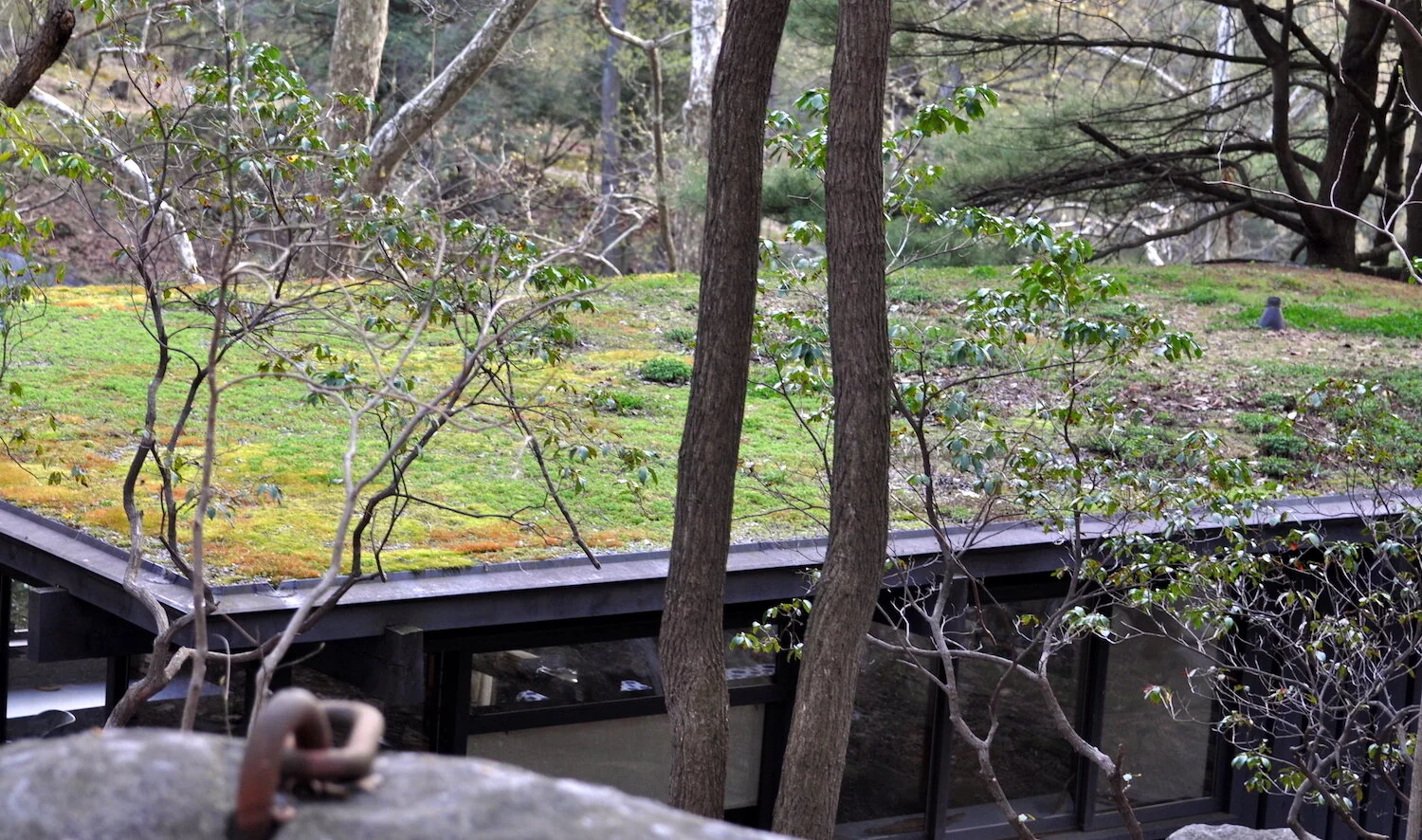
I left seven sycamores which makes this thick foliage, shading the living room, dining room and studio in the summer. The big fireplace chimney and all of the roof will eventually be covered with woodbine – a Northeast wild vine that is very green and luscious in the summer turning scarlet in the fall, and is like thatch in the winter. Russel Wright, 1961
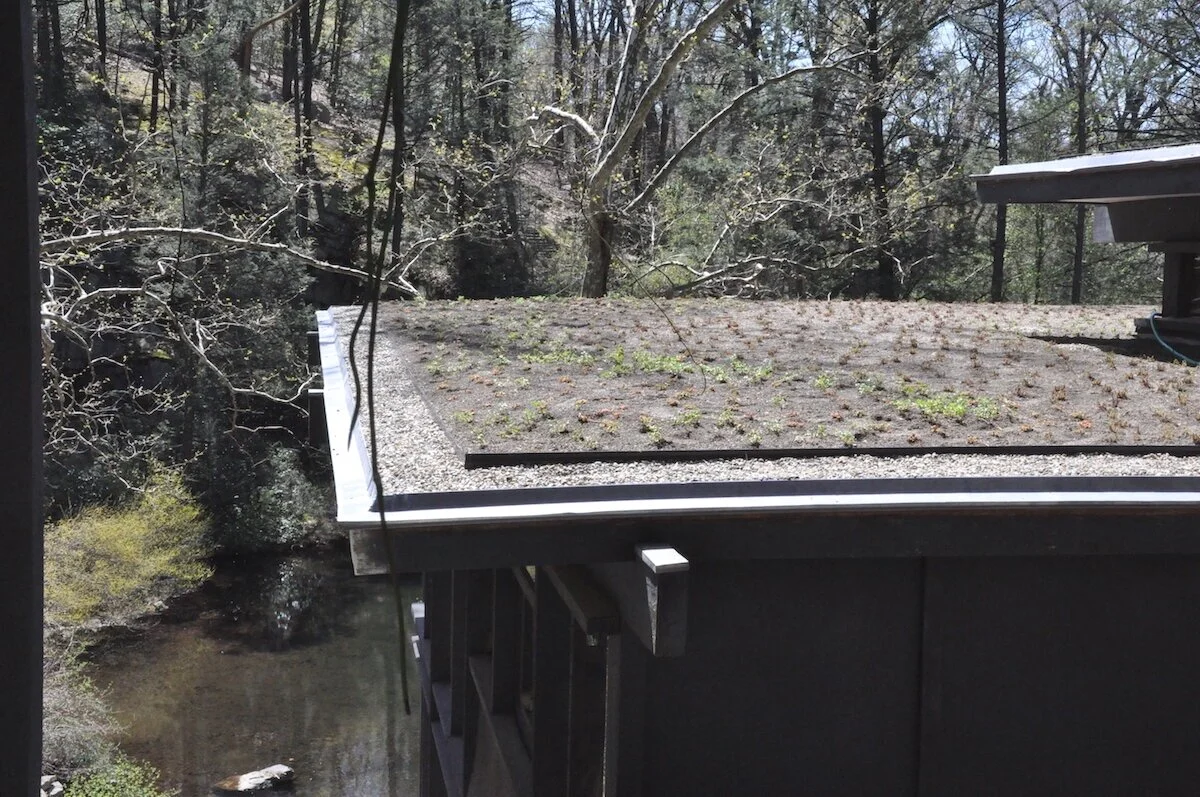
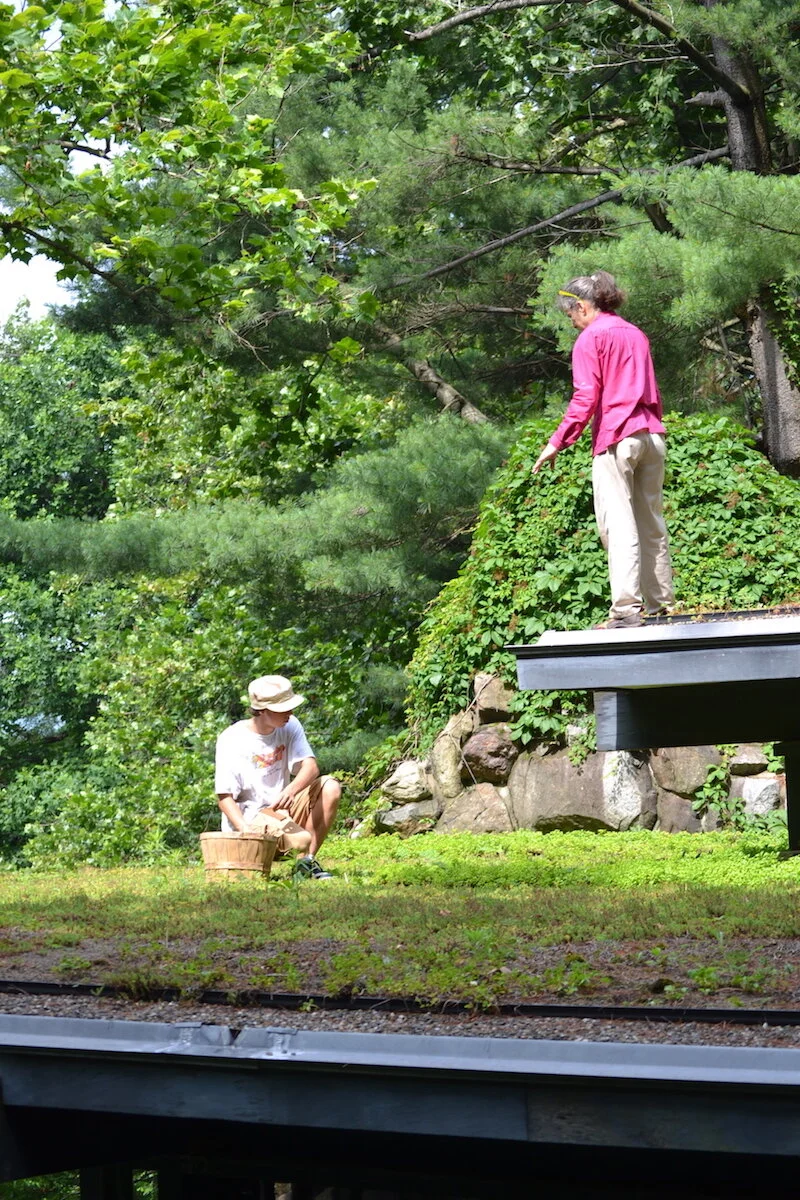
Russel Wright originally conceived of the roofs of Dragon Rock as opportunities to blend the natural and the man-made, extensions of the design philosophy he cultivated throughout his 75-acre estate. He allowed the flat-topped roofs of the Studio and Home to accumulate with soil and seeds, encouraging plant growth throughout. Although Dragon Rock architect David Leavitt advised Wright against his impromptu method of cultivating green roofs, citing certain water damage and structural instability, Wright remained committed to his vision.
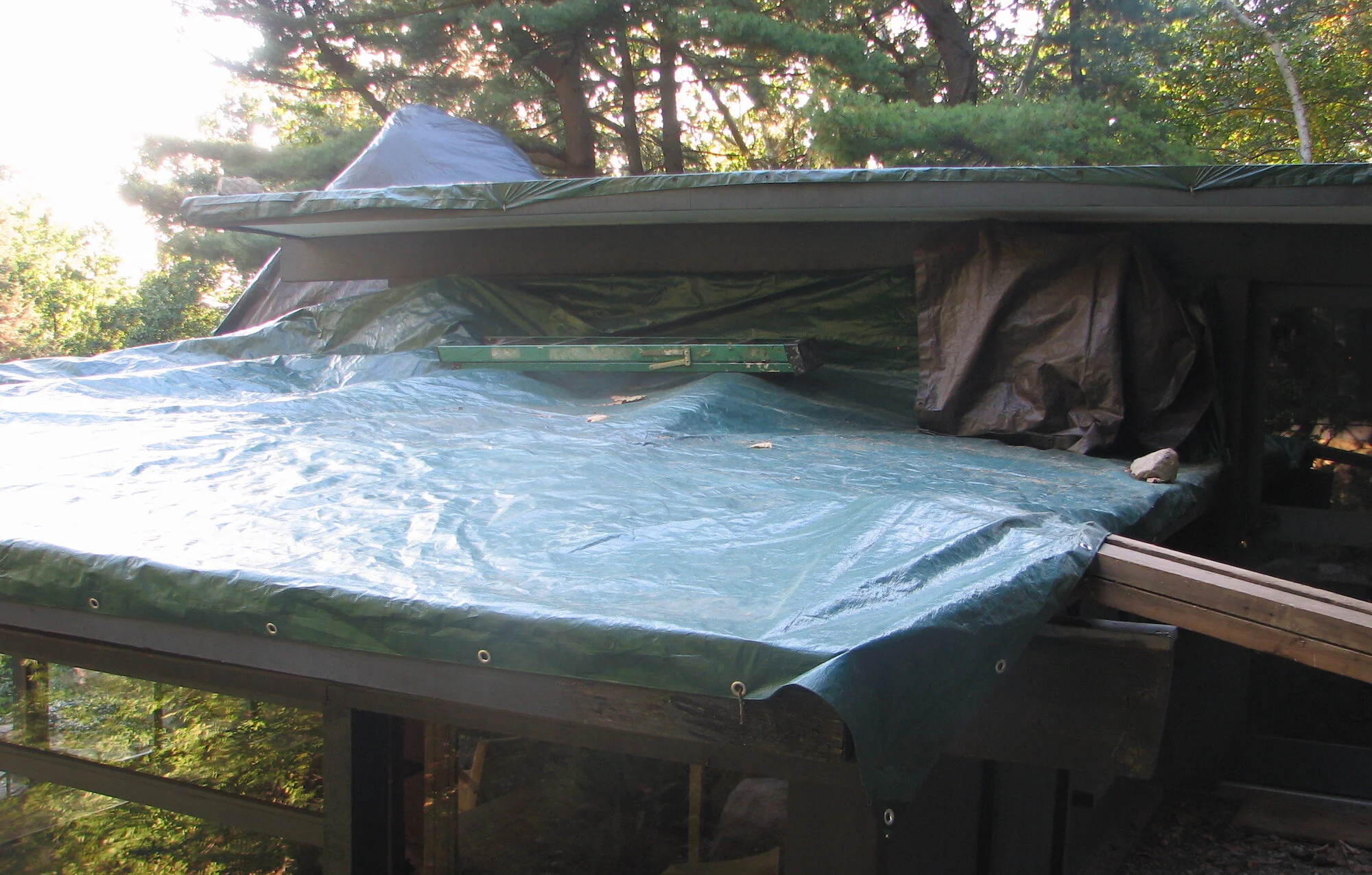
The foundations of the original wooden roofs were ill equipped to accommodate rooted plantings, and, by 2000, the damage was so advanced that it became impossible to honor Wright’s original design intent. Comprehensive restoration became necessary.
Conservators identified the following areas of concern:
Flat roof centers
Water runoff damage on the rafter ends, fascia, and soffits leading to severe deterioration
Uneven drainage and ponding of water
Uneven settlement of interior supports resulting in settlement of roof surface
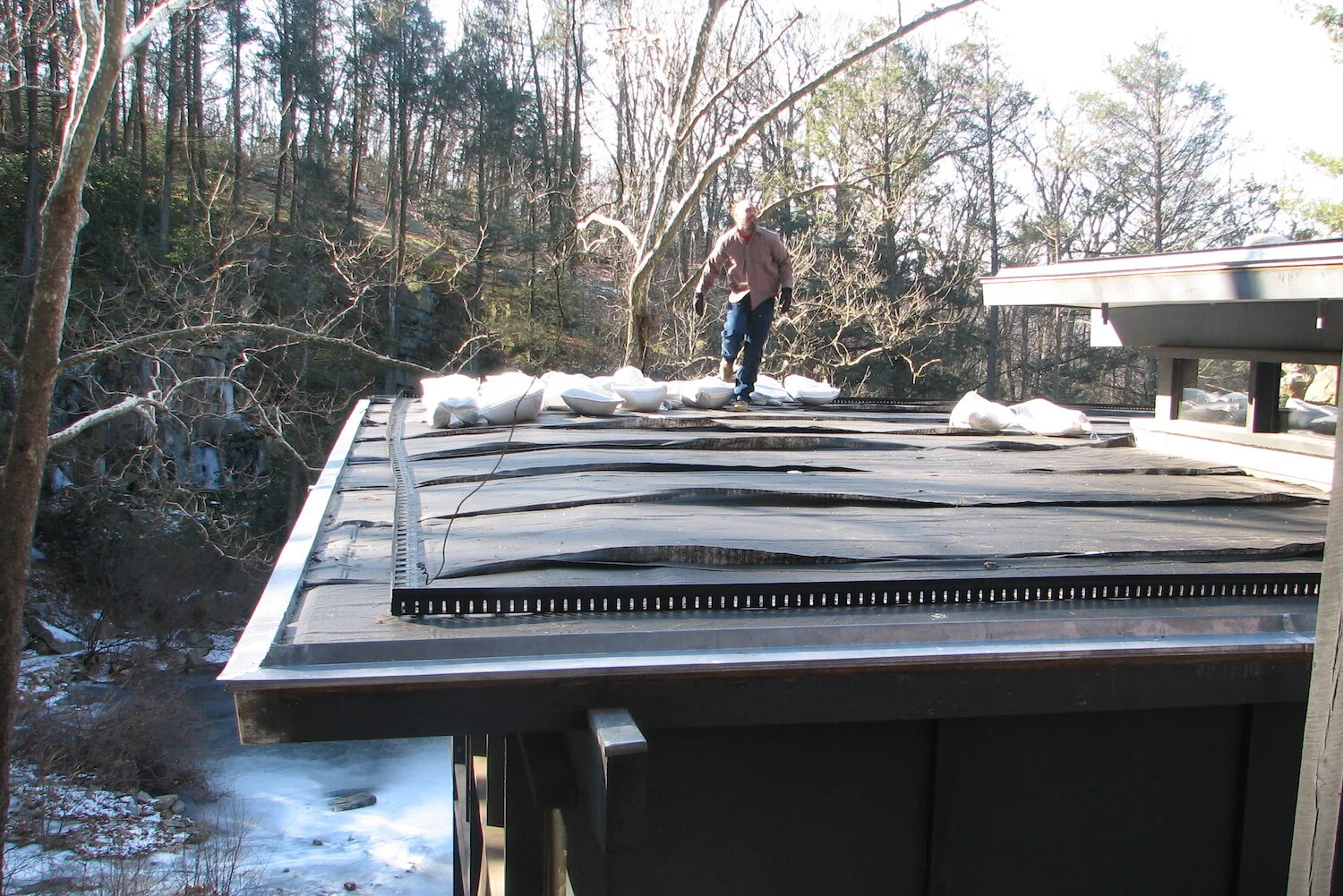
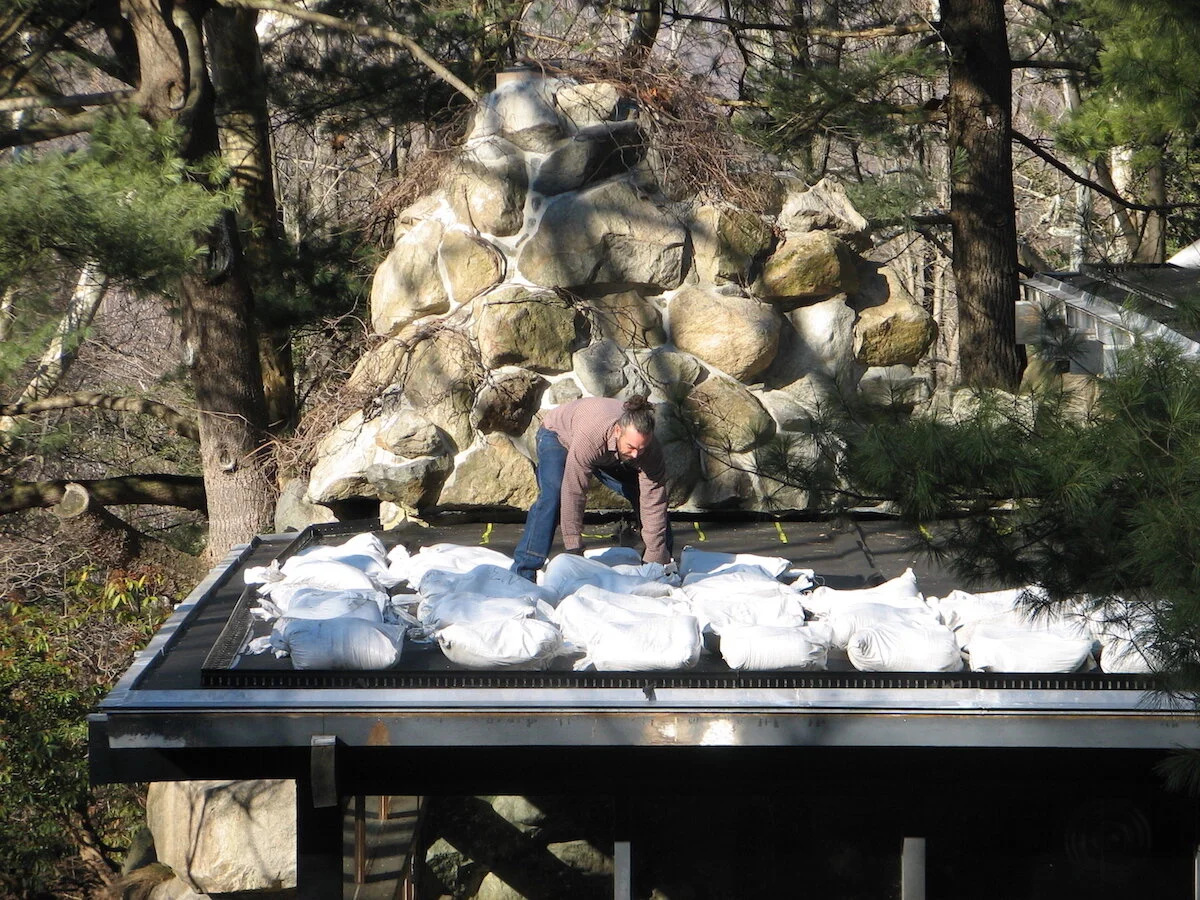
And worked to repair the damage:
Plywood roof decking slightly shimmed to provide a minimal slope at center to allow drainage while maintaining level appearance
Install new green roof membrane which replicates the original in profile and appearance.
Replacements for rotted beams, soffit boards, fascia boards and sills.
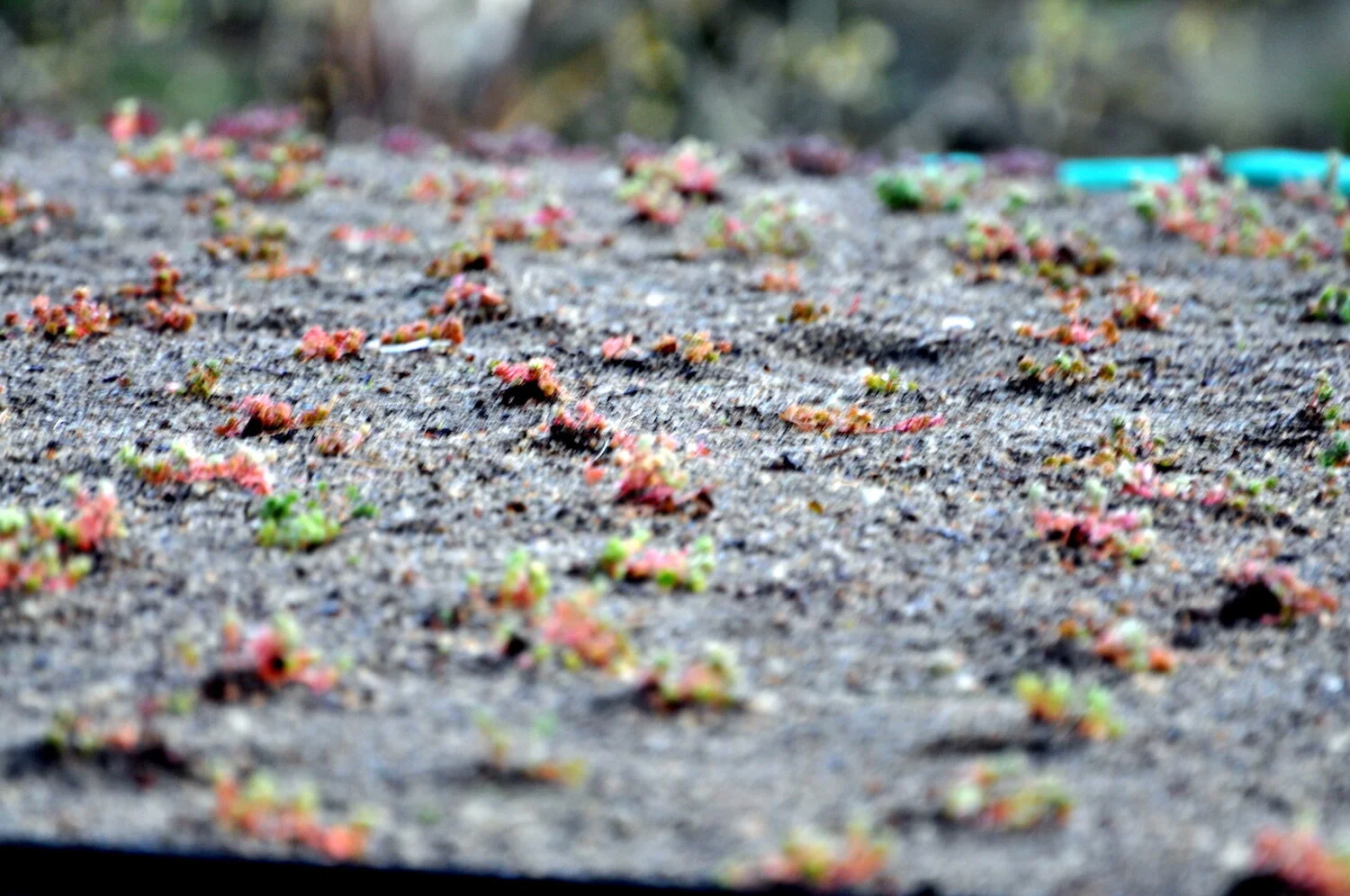
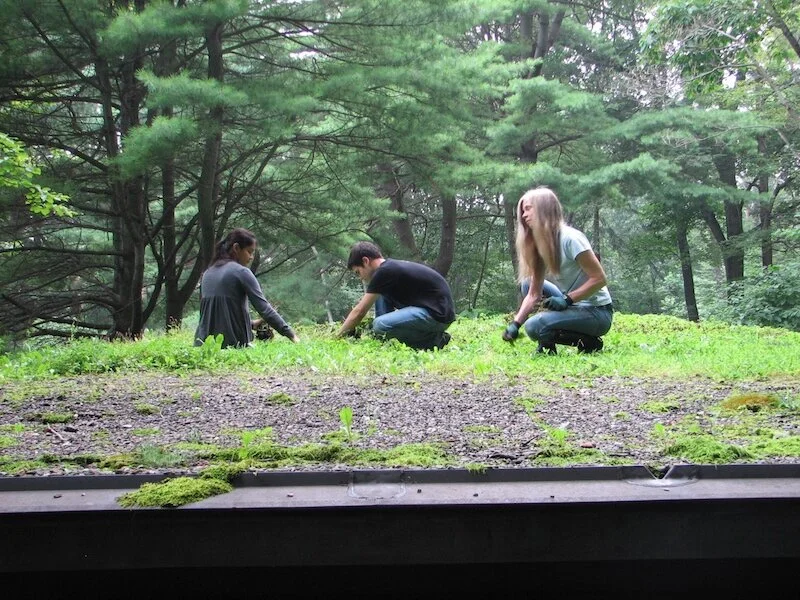
Roofs replanted: Virginia Creeper and native sedums on the House roof, and moss, aster, and violets on the Studio roof
Maintenance and Future
Manitoga’s landscape team regularly tends to the green roofs to upkeep the landscape collection and preserve the visual profile of the structure. Although many of the original plantings—Virginia Creeper, known to Russel Wright as Woodbine, and native sedums—remain fixtures of the roof, Manitoga’s landscape team fosterS the growth of other plants which have naturally come in over time.
PROJECT TEAM
Project Director — Michael Devonshire
Architecture — Michael Devonshire, Kurt Hirschberg; Jan Hird Pokorny Associates
Architecture — Kaitsen Woo Architect, P.C.
Analysis — Jablonski Berkowitz Conservation, Inc.
Carpentry / Roofwork — John Zuvic; Longnail Carpenters
Woodworking —Thomas Jerome, Inc.
Landscape — Ruth Parnall, Emily Philips
Plantings — Town & Gardens, Ltd.
Counsel — Carol Levy Franklin
Engineering Counsel — Robert Silman Associates, P.C.
PROJECT SUPPORT
Major support for this project was received through a matching grant from Save America’s Treasures, NYS funding sponsored by Assemblywoman Sandy Galef, Senator Vincent Leibell, New York State Council on the Arts, the David L. Klein, Jr. Family Foundation, other private sources, and a major in kind donation from Kemper System Inc.